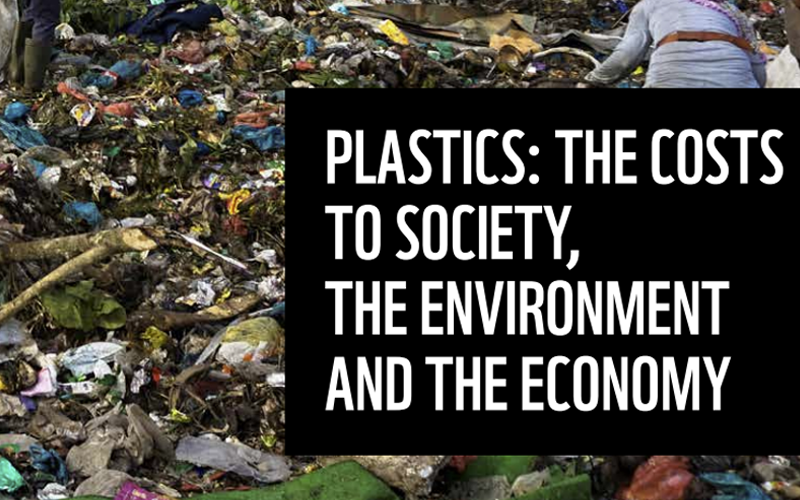
The World Wildlife Fund (WWF) published a report last week which puts a figure on the true cost of plastic to society, the environment and the economy – a not-insignificant $3.7 trillion a year and rising. To give you a perspective on how large a sum that is, it’s approaching the annual GDP of Germany, the 4th largest economy in the world.
In stark contrast, a kilo of standard ABS, one of the most commonly used plastics in manufacturing, averages around US$2.
The dichotomy is a result of a global economy based on a take-make-waste model, helped by an acceptance that, in most cases, the producer’s responsibility for a plastic product or component only goes so far as the checkout or online cart. What isn’t considered is the lifetime cost of the product, sometimes referred to as the life-cycle cost (LCC), which includes environmental and social costs.
Little wonder plastic has become ubiquitous and, along with it, the pollution it creates.
So, what would happen if manufacturers and brands paid the true price for plastic, not just the cost of the raw material but the additional tab for dealing with the pollution it causes?
The idea of extending responsibility for industry is nothing new. In the UK, the water companies are responsible for water provision and sewerage. Treating the waste is an accepted part of the service. Another more recent example that’s gaining traction, is the Carbon Takeback Obligation (CTO), which places the onus of dealing with CO2 emissions firmly back on fossil fuel producers.
If we are to tackle the big issues we face today, we need to understand the real cost of plastic on our health, our social wellbeing, our environment and our economy.