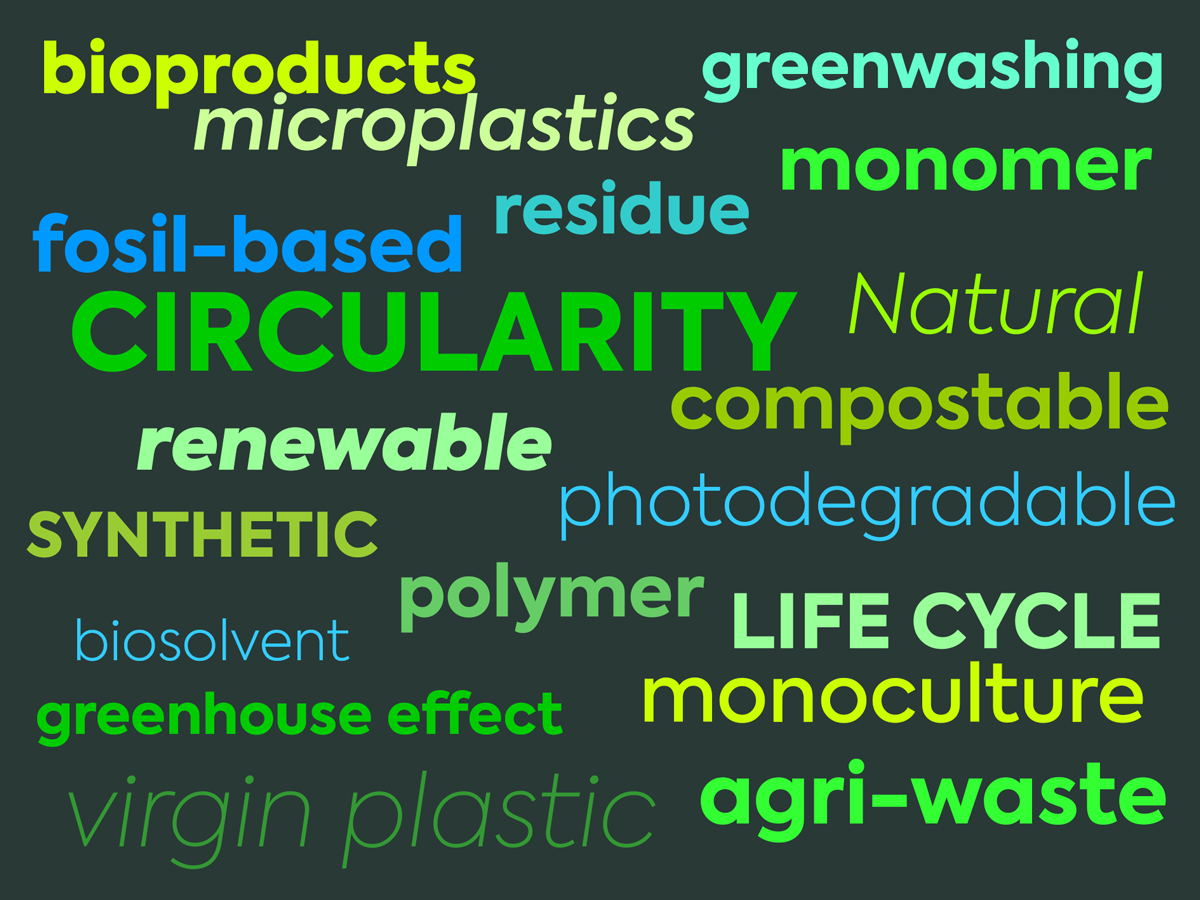
Do you know the difference between an Oxodegradable and a compostable material? And just what is a smart drop-in?
In the last year alone, the lexicon surrounding alternative materials has moved on rapidly.
At CirQulor, we’ve amassed definitions from trusted sources and leading organisations and popped them into a handy online glossary.
The aim is to aid understanding within organisations, clarify dialogue, and, we hope, provide much-needed continuity within a developing sector.
Who will find the glossary helpful?
It would probably be easier to ask who wouldn’t benefit. Anyone involved in materials development will find it helpful, however, the adoption of alternative materials encompasses virtually all companies, sectors and industries, across multiple supply chains, recycling systems and waste streams.
It’s also essential that policymakers and leaders use precise definitions to ensure policy and regulations are clear and watertight.
Consumers, too, will benefit from greater understanding, as we move away from generic words like ‘plastic’ to a host of new terms that, if used correctly, will allow for more informed purchasing decisions. A common language will also prevent consumers from being misled, whether intentionally or not.
Such is the need for a common language, it makes sense to define and standardize what will become an everyday lexicon.
An open, living resource
The CirQulor Postplastic Glossary is a free resource to share, cite and use.
And, as it’s a living resource that will grow and be revised as the postplastic lexicon develops, if there’s a word that you think should be included, or a definition needs to be improved, please let us know – there’s a comment box at the top of the page.