The rise, fall and rise again of Bioplastics.

Bioplastics seemed to be the answer to all our problems, yet have had some bad press in recent years, mainly for reasons of a misperception about what they actually are and what they promise.

The reason is that bioplastics are often labeled ‘biodegradable’ and ‘compostable’, and while bioplastics do decompose in nature more quickly than synthetic plastics, the truth isn’t anywhere near what consumers would expect these terms to mean. In order for items made from bioplastics to biodegrade they need to be composted in an industrial facility where temperature, humidity and oxygen levels are carefully managed to provide the optimum conditions that allow for the safe, natural breakdown process to happen.

Without the proper process, these early, or first-generation, bioplastics can actually cause more hazardous pollution as they continue to leech toxins and produce microplastics that will eventually end up in the food chain.

CirQulor is working with materials developers on what we call the next generation of bioplastics. These bioplastics harmlessly biodegrade in nature, leave no trace of microplastics, and have low to zero toxicity levels – making them likely to emerge as a viable alternative to plastic in the future.
Related articles

20in30 title-small

CirQulor 20in30 – Podcast

Where experts answer twenty questions in thirty minutes about plastic, alternatives-to-plastic and all things circular. #3 Hair’s what’s happening! , Andrew and Zsofia Kollar – Founder of Human Material Loop – get into what is ‘waste’ and the benefits of hypo-allergic, strong as steel, climate-positive high-performance textiles from human hair!

Read more »

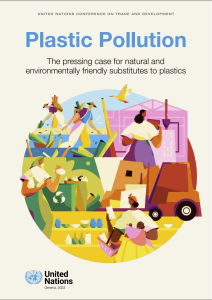
Plastic pollution solution? UNCTAD says; make a list…

Although there are new (some highly innovative) materials and products being developed and entering the market, a defined list of plastic substitutes does not exist (yet) The issue of plastic pollution is gaining momentum in the global effort to address climate change. And, while plastic substitutes are not an immediate

Read more »
The Impossibilities of the Circular Economy

The Impossibilities of the Circular Economy

Separating Aspirations from Reality 360dialogues  engaging graphic treatment examines circularity’s promise as a silver bullet for the planet’s problems and finds it wanting. With engaging visuals, it evaluates the claims from a scientifically informed perspective, illustrating the difference between possible and non-possible solutions for a more sustainable economy and provides a

Read more »

The Art of Invention

Let’s face it, it’s not easy to learn about alternative-to-plastic materials – often cutting-edge innovations described in the impenetrable language of the lab and the academy. But what about how we think about innovation? As IP lawyer Sara Holland’s article The Inventions so enjoyably shows, art has often been our

Read more »
Plastic waste dump aerial view

360º vision

”The amount of plastic produced in a year is roughly the same as the entire weight of humanity.”

There just aren’t enough elephants in the world for a comparison, so we’ll stick with 7 billion humans for now. The  truth is, if we want to achieve a sustainable future, we’ve a long way to go. But there are optimistic signs everywhere, green shoots that will change this planet for the better. Join us as we delve deep into a brave, new postplastic world.

Entries in this blog reference ‘CirQulor’.
This is Verdatica’s previous identity 

Latest