With COP26 fast approaching and the expectation that the general focus, particularly in the media, will be on climate heating, global CO2 emissions and the developing energy crisis, it’s worth taking time to view the current situation within the wider context of sustainability – one that encompasses economic, environmental and social development.
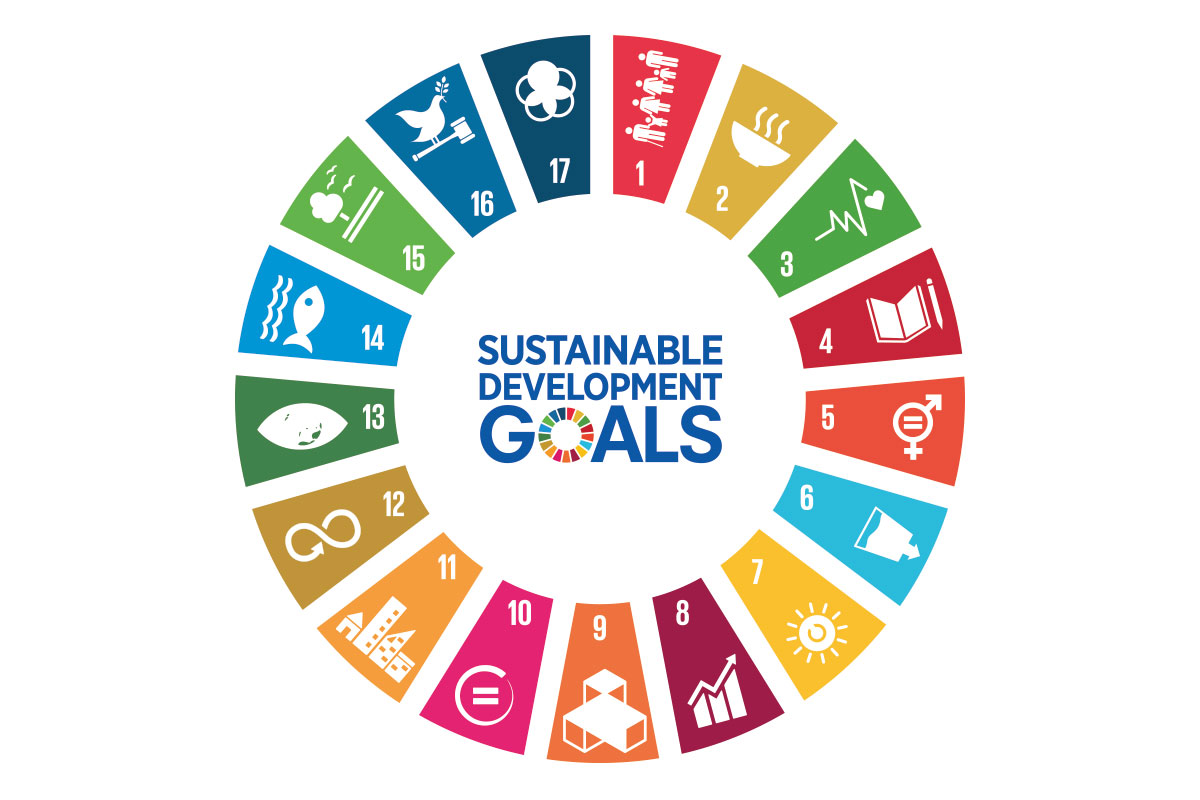
In 2015 the United Nations General Assembly formally launched 17 Sustainable Development Goals (SDGs), designed to be a “blueprint to achieve a better and more sustainable future for all”. But what are they exactly? And why are they so important?
The SDGs are important because all 193 members of the UN – the majority of the world’s nations – have agreed to work towards achieving them. Effectively this makes them a universally accepted set of goals to achieve a sustainable future for the planet by the year 2030 (being the original Agenda 2030 target).
The goals include indicators that cover three distinct areas: some focus on ecological impact, such as deforestation and biodiversity loss; some focus on social aspects, for example education and hunger; and others focus on infrastructure, like power and transportation.
The SDGs are often criticized for being inconsistent, difficult to quantify, implement and monitor. This isn’t surprising, for the simple reason that the success of any long term, directional goal is dependent on breaking it down into achievable actions that can be measured using indicators that are difficult, in most cases, to determine, particularly when quantifying environmental impacts.
Additionally, as with any global initiative, there are weighting issues, caused by economic disparities between first world and developing nations. This is compounded by the fact that all 17 goals are tightly interlinked and interdependent.
Richer nations are in a better position to raise capital for mega infrastructure projects, allowing them to address all 17 goals; whereas developing nations lack access to funding and may need to prioritize pressing issues such as famine and hunger. There may be additional challenges caused by political instability, unsupported implementation, and poor governance.
For companies and brands, the SDGs help companies ensure they cover all bases within their ESG and SRI commitments and plans. This will help avoid the increasingly regular (and damaging) calling out of companies and brands for greenwashing.
However, the SDGs are directional and broad in nature, requiring companies to break them down into clear, achievable goals, targets and KPIs, with an accompanying timeline to achieve them.
Most would agree, the United Nations SDGs are ambitious and challenging to implement. Yet despite all this, they are vital in coordinating global action and in delivering concomitant benefits to humankind and the ecosphere. As such, we believe they deserve to be at the core of every business with CirQulor’s activities addressing seven of the United Nations Sustainable Development Goals.
For in-depth information on global progress on the goals, visit the SDG Knowledge Hub, a project developed by the International Institute for Sustainable Development (IISD), an independent think tank.