A report by US market research company Dynata found that 68 per cent of consumers prefer to buy products and services from companies that are environmentally responsible. It is therefore incumbent on brands and businesses to ensure that their products are labelled correctly and accurately and that consumers aren’t misdirected.
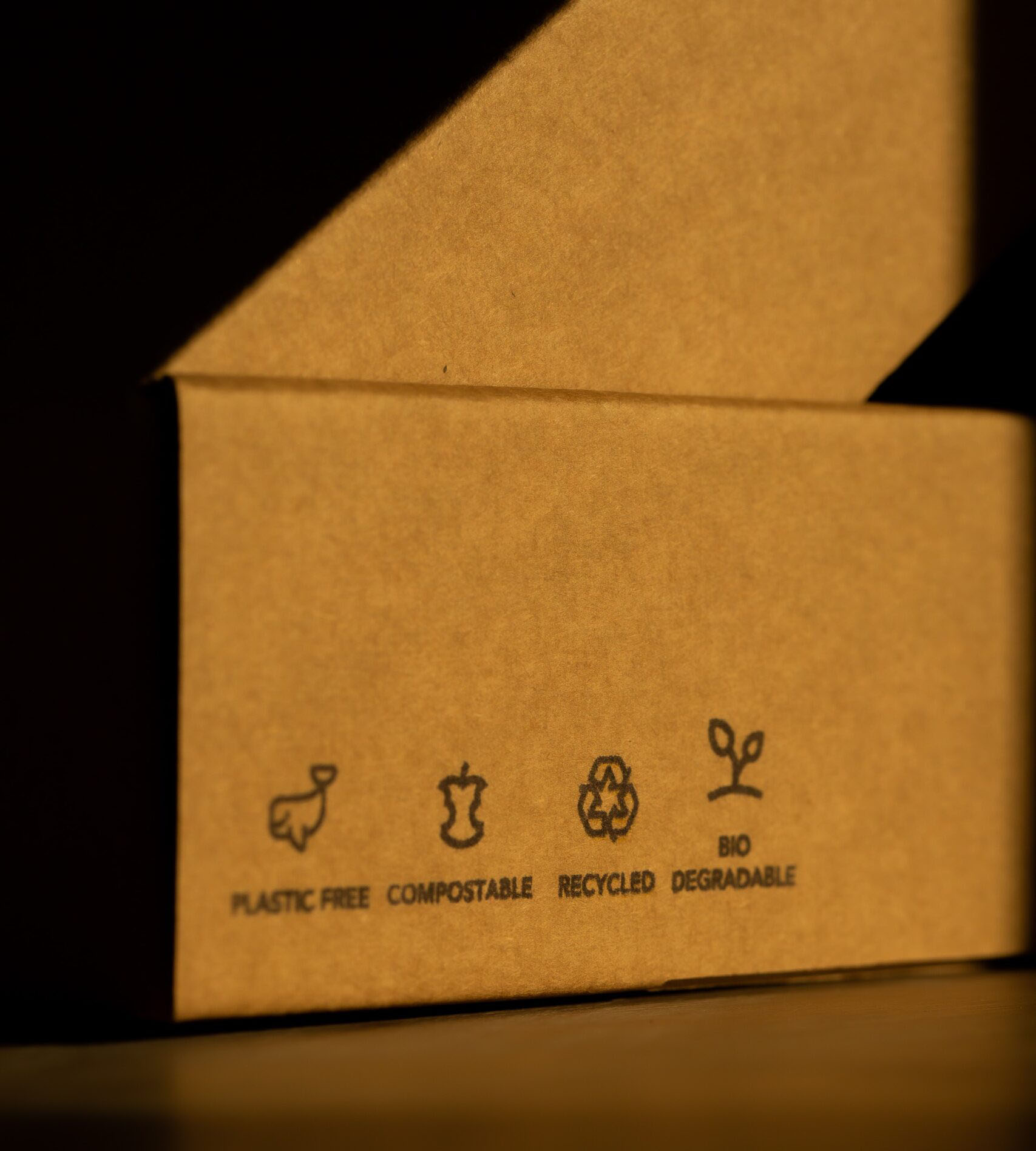
To avoid accusations of greenwashing, which can damage their reputation, brands should review whether labelling their products, components or packaging as ‘biodegradable’, ‘compostable’ and ‘bio-based’ is accurate.
So, let’s define what these terms actually mean so that confusion is avoided and consumers can continue to make informed purchasing decisions.
Biodegradable / Biodegradables
The ability of a material to decompose in soil, with the help of certain microorganisms. Everything degrades over time although some materials, such as plastic, can take hundreds of years to degrade.
Labelling a material biodegradable does not necessarily mean that the material degrades harmlessly. Some (not all) biodegradable plastics break down into micro-and nano-plastics which are harmful to the living biosphere and human health. Moreover, plastics that do biodegrade can be made from fossil fuel-based materials, requiring industrial processing for safe decomposition.
Not all materials biodegrade in the same way. If and how a plastic item biodegrades depends on a number of factors. For example, some materials degrade safely in soil (home compostability). Others don’t, requiring a mechanical or biological process within a controlled environment to break them down safely (industrial compostability). The UK’s Foodservice Packaging Association (FPA) is calling for an end to the description ’biodegradable’ in reference to packaging. Executive director Martin Kershhe of the Foodservice Packaging Association (FPA) states: “The term biodegradable has led many to believe that, no matter where disposed, so-called biodegradable packaging will disappear to nothing within a very short period.”
There are design issues too. Products are often made of multiple components and different materials. Which raises the question: Does the product have to be disassembled first and sorted into separate waste streams? And how easy is it for a consumer to a) do this, and b) have sufficient direction through labelling to ensure they dispose of each component properly?
We’re not talking solely about products with multiple components here either. That sandwich pack from the supermarket may say it’s biodegradable, but the film used for the window needs to be removed and placed in a separate waste stream. Does it say that on the packaging? No. And, more to the point, have you ever tried to remove the film from a sandwich packaging box? Go on, try it.
Compostable / Compostables
The ability of a material to decompose through the composting process which requires certain temperature levels and conditions. The process has minimal environmental impact, leaves no microplastics and remains harmless even outside of managed closed waste streams.
While the definition above seems pretty clear, confusion exists about compostables, most of which require end of life treatment. The confusion stems from the fact that there are two distinct types of composting: a material has either natural (or home) compostability or industrial compostability. The latter is a managed process that, in most cases, is mainly outside mainstream waste collection, i.e. it requires a closed-loop recycling system to be in place. It’s worth noting that standards exist for claims of industrial compostability, but not for natural compostability.
Industrial compostability
Industrial compostable products are made from natural materials (such as starch) and decompose completely without producing toxic residues during a managed process. To be classified as compostable, they must meet specific requirements set out in The European Standard EN 13432.
This is important because most consumers would assume that a product or piece of packaging labelled as compostable would mean they could, theoretically, bury it in their garden. When the reality is that most compostable materials, and especially compostable plastics, are a form of bio-waste and require a bio-waste treatment infrastructure.
Bioplastics / Bio-based material
Bioplastics are plastics made from biological materials, whereas plastic (traditional) is derived from fossil-based polymers (petroleum). Examples of bio materials are plants, bacteria and crop by-product.
Last, and by no means least, we have ‘bio-based’. While the term may accurately describe the material used, the issue here is that the material alone does not make it environmentally friendly. A positive impact is only assured if there is a robust bio-waste treatment infrastructure in place to deal with the material at end of life. However, as the use of ‘widely recycled’ has shown, these terms are regularly used regardless of whether there’s an available recovery process.
That the general public is confused over these terms is understandable. It’s early days and we’re only just beginning to understand what a truly circular economy means for waste management and disposal. But, as ever more alternative materials replace traditional plastics, the labelling challenge can only increase.
The overriding principle? Brands need to be completely open and honest with consumers. Products and packaging should be clearly labelled and brands need to be accurate in their use of terms like biodegradable, compostable and bio-based. Let’s say farewell to greenwashing for the sake of business, consumers and the planet.
Photo by Marcell Viragh on Unsplash